

Operationalizing Legal AI Compliance for High-Risk Judicial Systems
Overview
Legal technology platforms are under intense regulatory scrutiny as the EU AI Act comes into force. Systems used in the "administration of justice" such as those for document automation and case triage are explicitly classified as high risk. For many mid sized tech providers, traditional "black box" AI models have become a massive liability. Without a fundamental shift in architecture, these firms face legal shutdowns, massive fines, and a total loss of market trust.
The Challenge
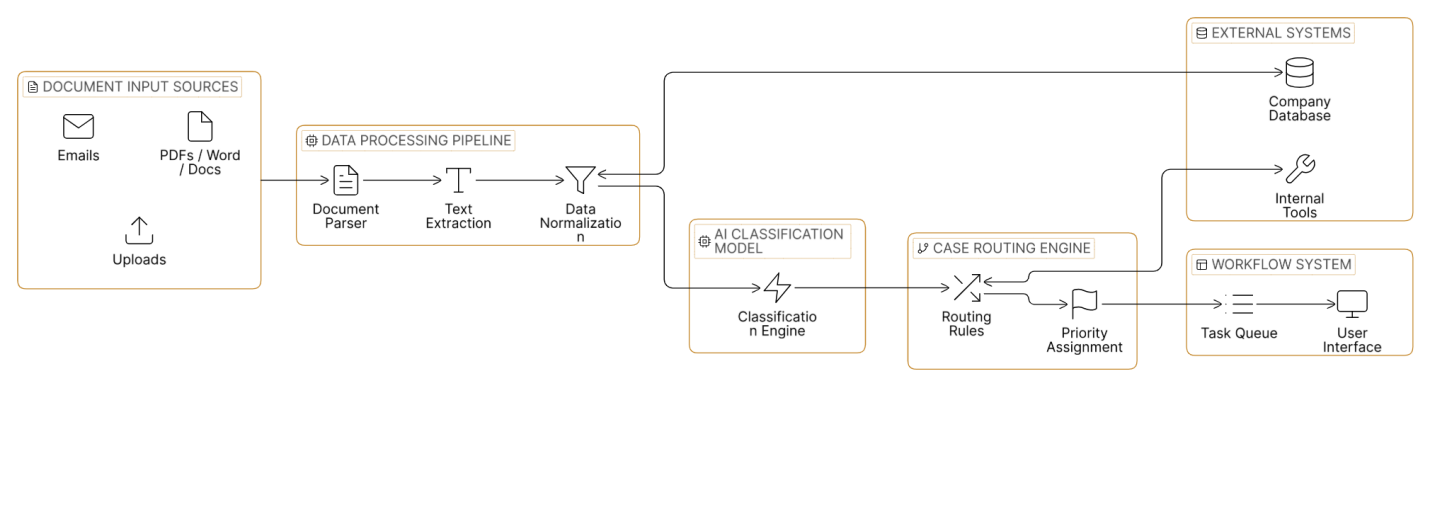
An established legal tech platform utilized AI/ML to automate document processing and triage. While efficient, the system was built before the EU AI Act’s strict mandates. Upon classification as a high-risk system, the organization faced an existential threat: their core product lacked the mandatory transparency and safety controls required by law. They were forced to either redesign the entire infrastructure for "inspection readiness" or exit the European market entirely.
Structural Inefficiencies and Critical Gaps
Upon analysis, the existing infrastructure suffered from three systemic failures that made legal compliance impossible:
- The Governance Vacuum (Art. 9 & 10): The system lacked a formal risk management framework. Training datasets were not vetted for fairness or completeness, leading to unbalanced data from past cases being used without bias checks, risking discriminatory outputs.
- The "Black Box" Liability (Art. 11 & 12): There was no comprehensive technical dossier or audit logging. The system did not record its actions, making it impossible to trace decision paths, inputs, or outputs violating the core traceability requirements of Article 12.
- The Automation Trap (Art. 14 & 15): AI decisions were fully automated with no human in the loop oversight. The system lacked a "stop button" or manual override path, and had no backup fail-safes or adversarial-defense measures to ensure robustness against attacks.
The Economic and Procedural Reality
Under the original "pre-compliance" architecture, the firm was vulnerable to court challenges and regulatory sanctions. Manual assembly of compliance evidence was estimated to cost thousands of hours in engineering time for every audit. The boutique needed a way to transform their simple AI inference pipeline into a regulated, audit-ready infrastructure to remain profitable and legal.
The Opportunity
Modern legal AI requires a shift from reactive documentation to Continuous Compliance Enforcement. By embedding regulatory requirements directly into the runtime architecture, firms can move from "guessing" at compliance to a state of permanent audit readiness.